
Drying Dogs in Humid Weather: A Checklist for Philippine Shops
· Furward · 5 min read
Humid weather makes drying the hardest part of a groom. A practical checklist for Philippine groomers: dry to the skin, protect flat-faced breeds, and plan your day.
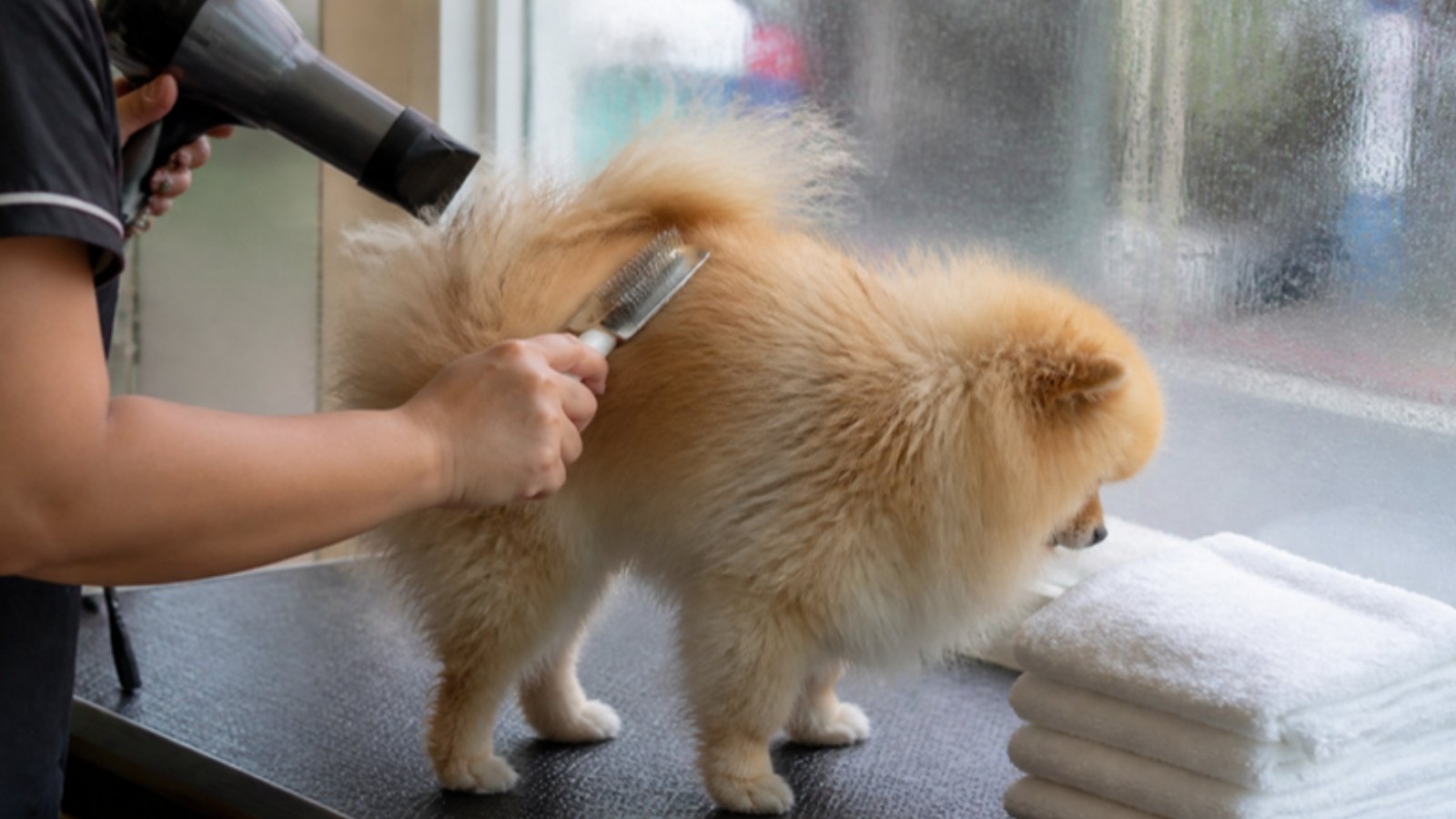
It's a rainy Thursday in Cavite, the shop windows are fogged up, and a fluffy Pomeranian just came off the table. The top coat feels dry. Then you push your fingers down to the skin and it's still cool and damp. Sound familiar?
In humid weather, drying is where a good groom is won or lost. Rush it and you get a coat that tangles faster, a dog that smells off by the weekend, and a suki who wonders why the groom didn't last. Here is a checklist you can use on your next busy day.
Why drying is harder here
The air in the Philippines is already full of moisture, especially in the rainy months. Coats don't release water as quickly, and towels get saturated halfway through a busy day. A damp undercoat that is left alone can mat more easily and can irritate the skin. Dry coats are also much easier to brush out and finish neatly.
So the goal is not "looks dry." The goal is dry down to the skin.
The drying checklist
1. Start the drying in the bath
Squeeze out as much water as you can with your hands before the pet leaves the tub. Press the coat down the body and along the legs and tail. Every bit you remove here is time you save at the dryer.
2. Blot with a towel, don't rub
Press and squeeze with a clean, dry towel. Rubbing a wet coat, especially a long or curly one, can create tangles. Change to a fresh towel when yours is soaked. In humid weather, keep more towels ready than you think you need.
3. Match the method to the coat
| Coat | What usually works |
|---|---|
| Long and silky (Shih Tzu, Maltese) | Dry in sections while brushing, working from the skin outward |
| Curly (Poodle, Poodle mixes) | Dry while brushing, section by section, so curls dry straight enough to trim cleanly |
| Thick double coat (Pomeranian, Husky) | A high-velocity dryer to move water out of the undercoat, then brush in layers |
| Short coat (many Aspin, Puspin) | Towel blot, then a short dry on low heat, and check the skin |
This is general guidance. Your own hands will tell you more than any chart.
4. Brush while you dry
Drying and brushing together stops the coat from setting in knots. Hold a section, direct the air at the skin, and brush the damp hair away from it. It takes a little longer on the table, but you spend less time dematting later.
One firm rule: never put a wet, matted coat under heat. Heat makes mats tighten. De-mat before the bath, or, with the owner's consent, shave the mat down.
Quick tip: Finish every dog with the "skin check." Part the coat in two or three places, especially behind the ears, under the legs and at the base of the tail, and touch the skin. If it feels cool or damp, it's not done.
5. Go gently on heat and air
Pets can overheat, and flat-faced breeds like Shih Tzu and Pugs are especially sensitive to heat. Use cool or low heat, never hot. Keep the nozzle moving and about a hand's distance from the skin, so nobody gets burned or dried out. Don't blast air at the eyes, ears or nose.
Watch for heavy panting, restlessness, drooling, or a dog that turns weak or wobbly. If you see any of these, stop and give the dog a break right away.
Cage dryers need extra care. For flat-faced dogs, seniors and nervous dogs, avoid them where you can. If you do use one, keep it short, check often, stay close and never leave a dog alone in it. If a pet shows signs of distress, stop, cool the area down and call the owner. Anything that looks like a health problem goes to a licensed veterinarian.
6. Give nervous dogs a break
Some dogs hate the dryer. Loud noise, air on the face and being held still all add up. Let them settle, go slow around the head and ears, and offer a pause. Keep the dryer pointed away from the face.
Write it down so the next groomer knows. In Furward, the pet profile can carry a behaviour flag, such as "Nervous with dryers," that shows up front, so the whole team sees it before the dog is on the table. If you want to try it, you can start a free 14-day trial.
Set up the shop for humid days
A few small habits protect your drying time:
- Stock more towels than a dry-season day needs, and wash them often.
- Plan the schedule around drying, not just bathing. Thick-coated dogs take much longer than short-coated ones, so don't stack three of them back to back on one dryer.
- Keep airflow going in the grooming area with a fan or good ventilation, so the room doesn't hold moisture.
- Clean dryer filters and vents regularly. A clogged dryer works harder and dries slower.
- Tell owners the plan. On humid days, say that drying will take its time, and ask them to keep the pet out of puddles and rain on the way home.
Send them home dry
Before the pet leaves, do one last pass: brush through, check the skin in the usual damp spots, and make sure the paws and between the toes are dry. A coat that goes out dry stays fresh longer and is easier for the owner to maintain.
Quick answers
How long should drying take? It depends on the coat, the size and the humidity. A thick double coat takes much longer than a short coat, so plan your schedule around the coat, not a fixed number of minutes.
Can I just let a dog air dry on rainy days? It isn't a good idea for most coats. A coat that stays damp near the skin can tangle and irritate. Finish with a proper dry and a skin check.
What if a dog gets stressed or overheated at the dryer? Stop, give the pet a break in a cooler spot and let it settle. If something looks wrong, such as laboured breathing or collapse, contact a licensed veterinarian right away.
In humid weather, "dry" means dry at the skin, so check it before the dog leaves your table.
- drying
- humid weather
- grooming tips
- shop management